--col-off-white: #F7FDFC
--col-off-white
--col-headingtxt: #00312F
--col-headingtxt
--col-pri: #00B5AE
--col-pri
--col-sec: #80DAD7
--col-sec
--col-ter: #99E1DF
--col-ter
--col-tint--light: #99E1DF
--col-tint--light
--col-tint--normal: #80DAD7
--col-tint--normal
--col-tint--dark: #66D3CE
--col-tint--dark
--col-tint--darker: #4DCBC6
--col-tint--darker
--col-tint--darkest: #33C4BE
--col-tint--darkest
--col-shade--light: #00918B
--col-shade--light
--col-shade--normal: #007F7A
--col-shade--normal
--col-shade--dark: #006d68
--col-shade--dark
--col-shade--darker: #005b57
--col-shade--darker
--col-shade--darkest: #004846
--col-shade--darkest

Stephen Perse Cambridge
Nature Reserve
The best little wetland in Cambridge
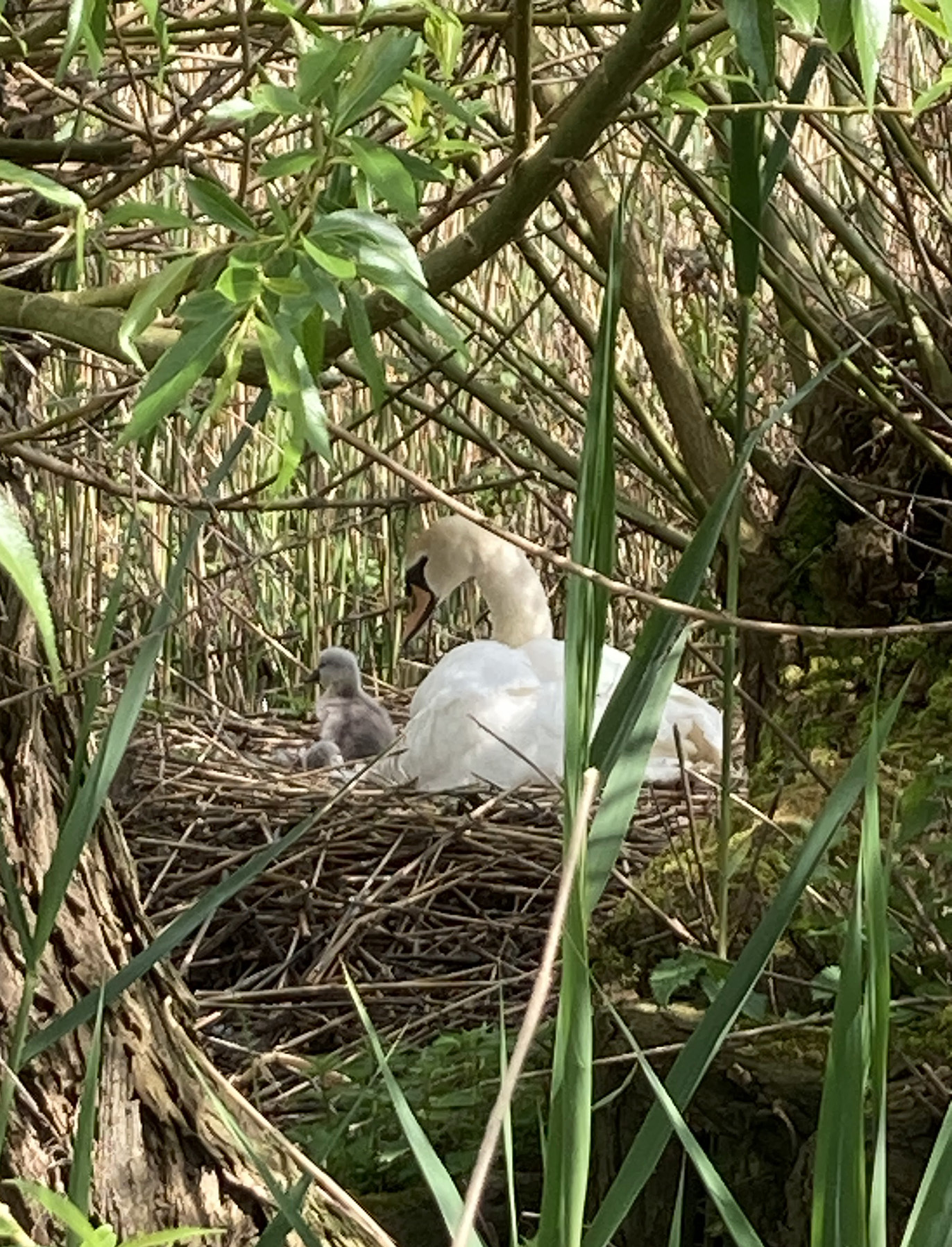
The Stephen Perse Cambridge nature reserve at the back of our sports ground site on Latham Close is our own biodiversity oasis, home to many wetland species and local wildlife. From resident warblers to breeding demoiselles, and grass snakes to nesting swans, it is a place that offers a place for students to learn practical conservation skills, explore natural history, and investigate methods to monitor biodiversity on the site.
The Nature Reserve allows students to learn skills to restore a water meadow, create new habitats, manage a reed bed system and maintain a small pond. It is our unique resource for integrating formal and non-formal education with ecology as part of the school’s commitment to be an exemplar of education for sustainable development from Early Years to Sixth Form. This is not just a learning space, many students comment on how calming the activities are as they sow, grow and seed from one year to the next.

My career has been dedicated to wildlife conservation and environmental action, and I am keen to foster a love of nature and sustainability in our students. I have extensive experience leading national "citizen science" programmes for the Wildlife Trusts and researching recycling behaviours for DEFRA, and am a Fellow of the Highland Institute and member of the IUCN European Communication & Education Committee. I am passionate about empowering people to engage with key societal issues like plastic pollution and biodiversity, and I am passing on my knowledge and experience to our students.
Wayne Talbot
Head of Ecology
 "
"Co-curricular environmental clubs
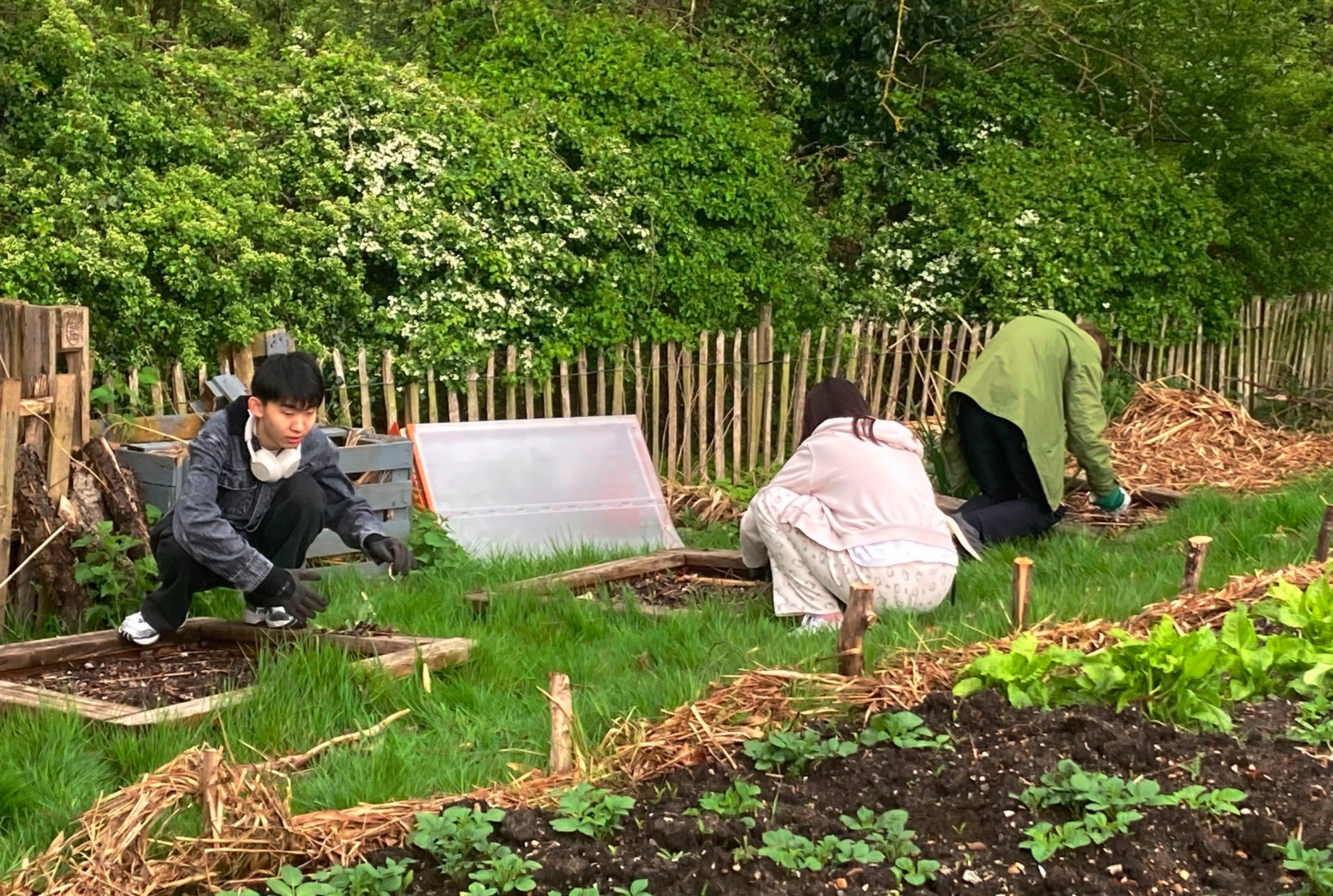
Senior School students have the opportunity to join the ‘Eco-Enrichment’ club with the opportunity to learn practical conservation and habitat restoration skills on our Nature Reserve under the guidance of our Conservator.
Students can also participate in the 'Spud (Allotment) Club' where they learn vegetable growing skills. They can apply their enthusiasm for engineering and construction by using recycled and natural materials to design propagators, fencing or maintain raised beds. There are opportunities to experiment and compare different growing techniques such as Hügelkultur beds, lasagne soils or Altai water conservation.
Our jetty on the River Cam
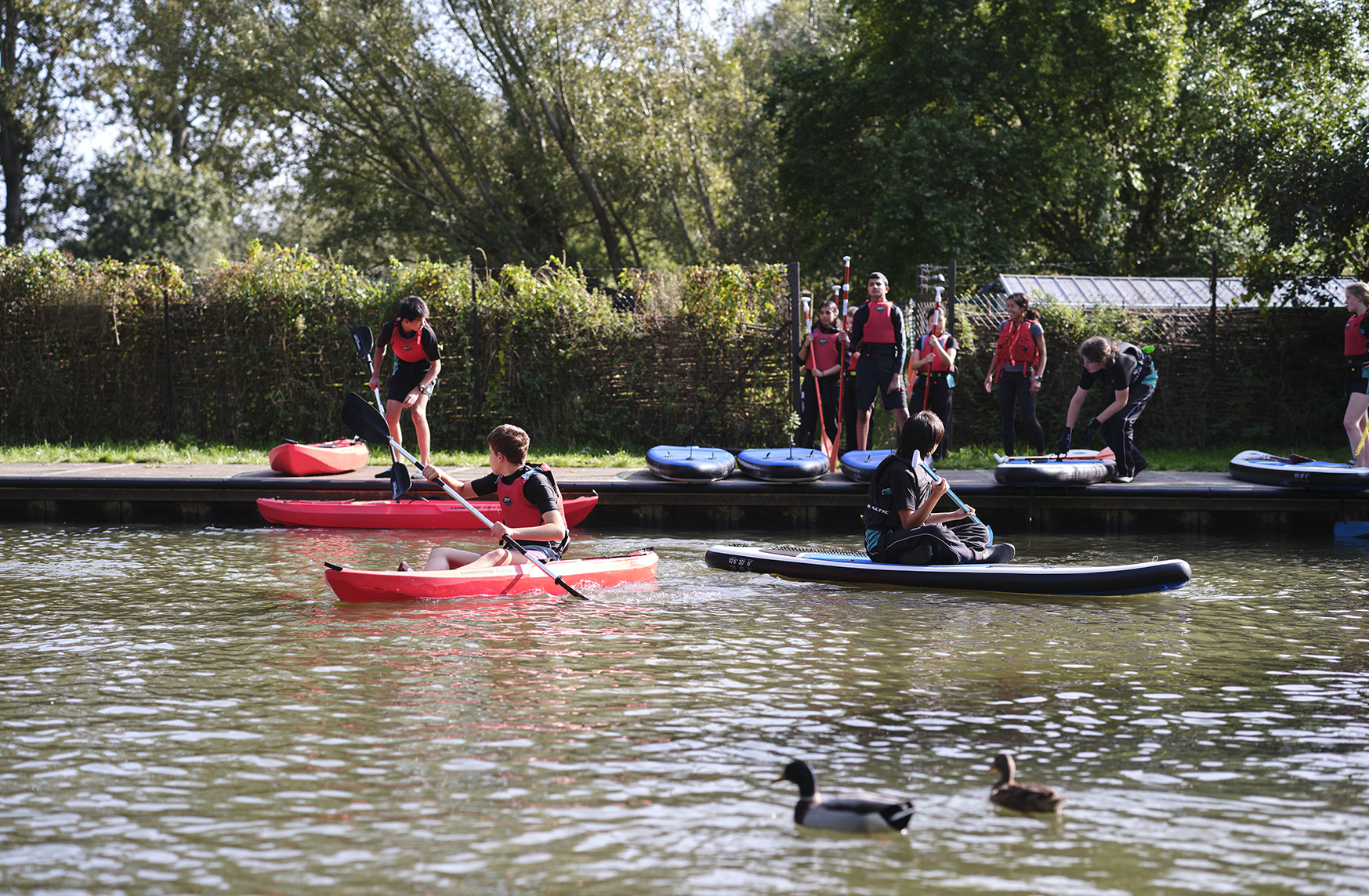
We have our own private jetty on the River Cam, where our pupils enjoy a unique vantage point for observing wildlife, as well as direct access to our popular co-curricular Paddlesports programme.
Forest school
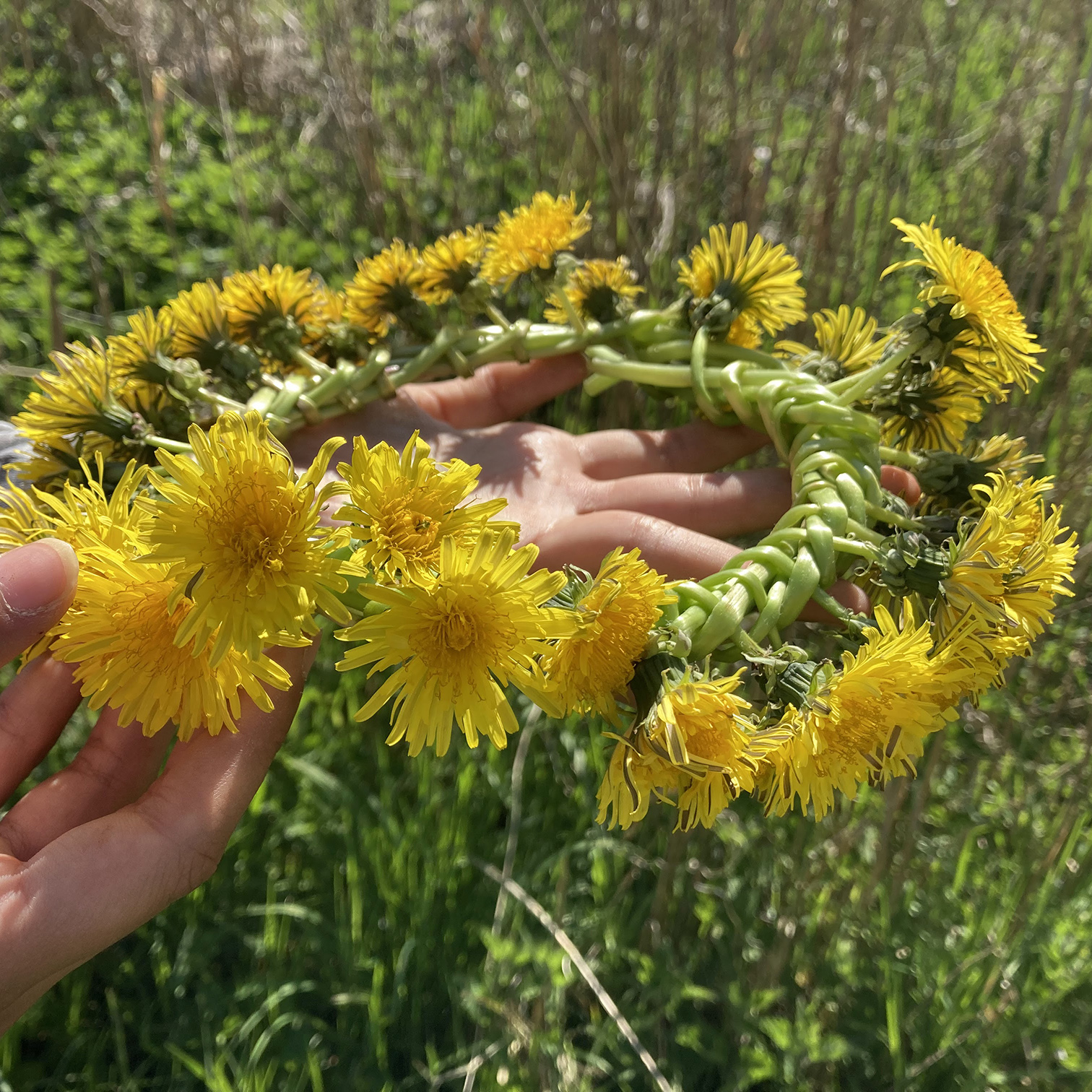
The nature reserve also hosts our Cambridge-based Forest School sessions, providing our Forest School students with a fantastic environment in which to experience a blend of nature-based learning, practical skills, and imaginative play.
Ranging in activities from building nests and birdhouses using found materials, and shelter building complete with hot chocolate – our students love being connected to nature.
 "
"Working with the Wildlife Trust
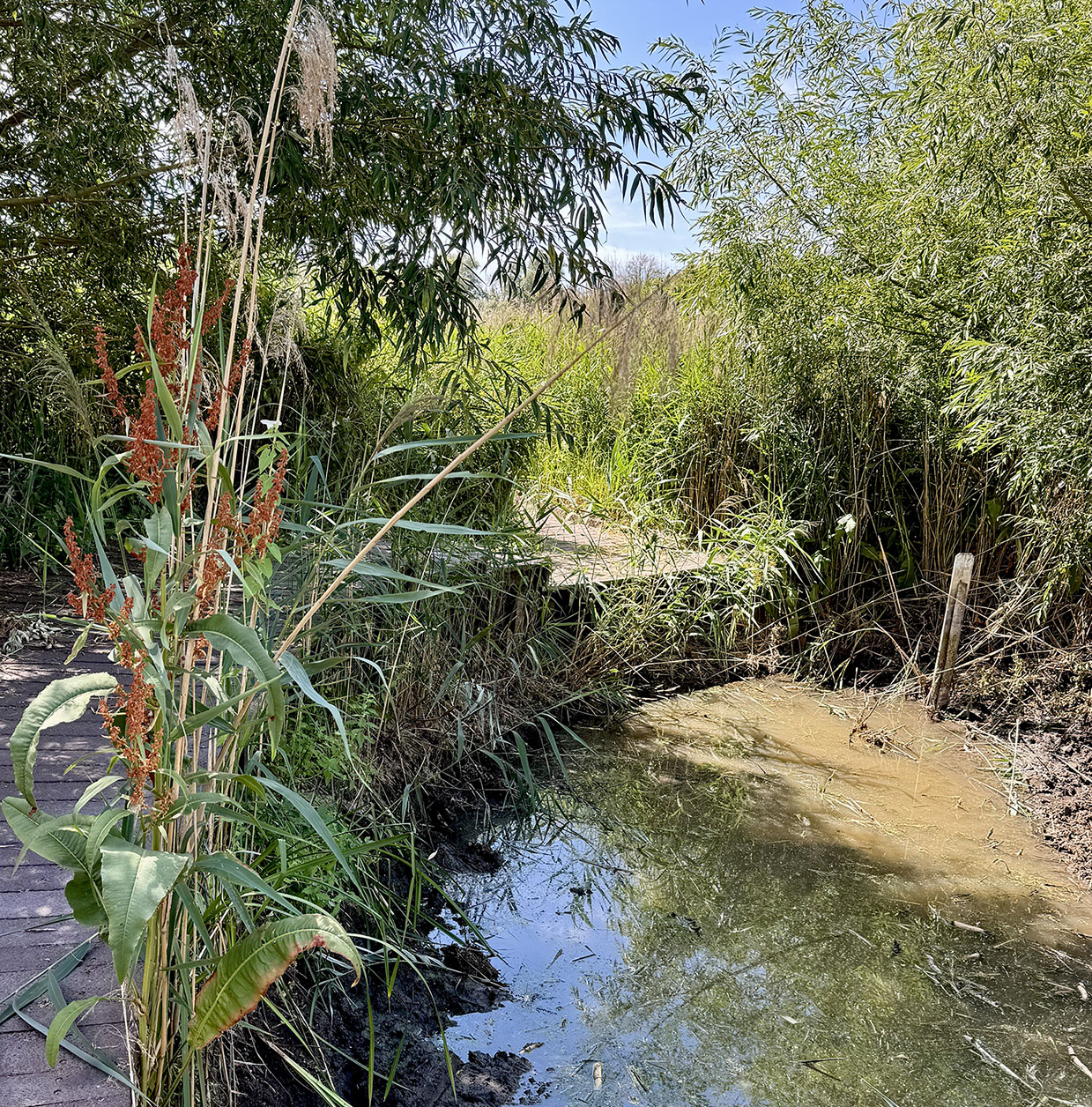
Working with the Wildlife Trusts for Beds, Cambs & Northants has enabled Stephen Perse Cambridge to fully restore a pond within our nature reserve.
Their expertise, guidance and support have helped us return the pond to its former size and shape, safeguarding a valuable habitat that could otherwise have been lost. Funded through Natural England’s District Level Licensing scheme for Great Crested Newts, the restoration forms part of our contribution to the Cambridge Nature Network, helping to strengthen ecological connectivity along the River Cam County Wildlife Site corridor.
The restored pond provides valuable habitat for newts, moths, dragonflies, damselflies and demoiselles. Hibernacula created from dredged material will also support local amphibian and reptile populations, while making the pond easier to maintain in the future.
The project demonstrates how even small sites can make a meaningful contribution to nature recovery. Through working together on partnership and practical action, the Wildlife Trusts have helped us enhance biodiversity and ensure our nature reserve continues to support a diverse range of wildlife.
Our 'Intercontinental Potato Experiment’
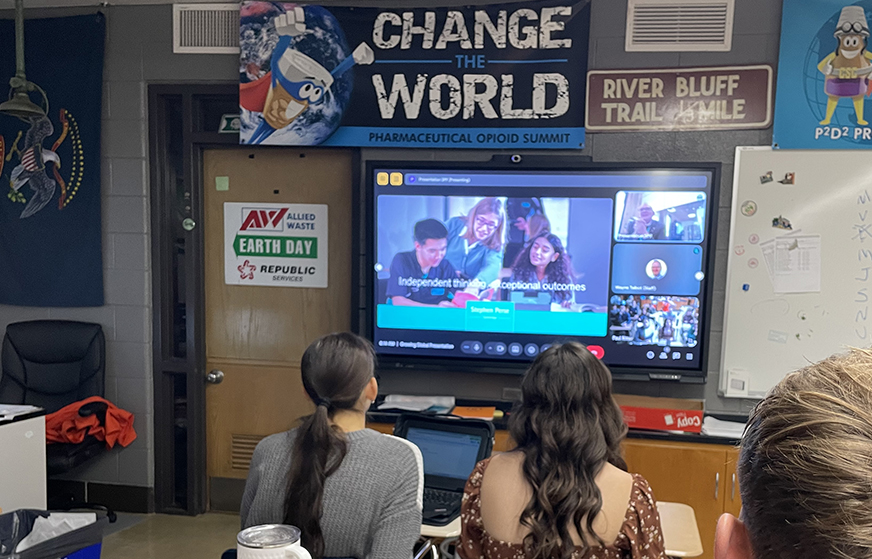 Through our flagship ‘Intercontinental Potato Experiment’ programme, we have built vibrant partnerships with schools across India and the USA. This project transcends borders, allowing students to act as global scientists.
By swapping data and observations, they compare how diverse climates and soil types affect growth, fostering a deeper understanding of agricultural science and international collaboration.
Pictured: Wayne Talbot delivering a remote lesson to Pontiac Township High School in Illinois, USA.